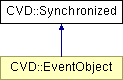
#include <synchronized.h>
Only one thread can own the lock at a time. Classes should subclass from Synchronized if they want to be able to lock themselves.
Definition at line 14 of file synchronized.h.
Public Member Functions | |
| Synchronized () | |
| virtual | ~Synchronized () |
| void | lock () const |
| void | unlock () const |
Protected Attributes | |
| pthread_mutex_t | myMutex |
Static Protected Attributes | |
|
static pthread_mutexattr_t | ourAttr |
| static bool | ourInitFlag |
| CVD::Synchronized::Synchronized | ( | ) |
Create an initially unlocked mutex.
| virtual CVD::Synchronized::~Synchronized | ( | ) | [virtual] |
The lock is acquired before deconstruction.
| void CVD::Synchronized::lock | ( | ) | const |
Acquire the lock; this blocks until the lock is available.
This can be called multiple times by the same thread without deadlocking. Each call should have a matching unlock() call.
Referenced by CVD::Lock::Lock(), CVD::MessageQueue< std::tr1::shared_ptr< CVD::Runnable > >::read(), CVD::MessageQueue< std::tr1::shared_ptr< CVD::Runnable > >::write(), and CVD::ReadAheadVideoBuffer< T >::~ReadAheadVideoBuffer().
| void CVD::Synchronized::unlock | ( | ) | const |
 1.5.3
1.5.3